
How to compare business ideas comes down to more than choosing the one that sounds exciting. I recommend comparing each option against the same evidence: who will pay, how soon you can test demand, what it takes to deliver, and what happens if you are wrong.
A strong idea is not automatically the best idea for you right now. One business may have a larger upside but require capital, licenses, staff, and a long sales cycle. Another may be smaller, but easier to validate while you keep your current income and responsibilities in place. The goal is not to find a perfect score. It is to make a clear decision with realistic assumptions.
I’ve learned this from my own experience. I’ve had more business ideas than I could possibly pursue, and being capable of doing something doesn’t automatically make it the right business to build.
I also have a career, a paycheck, benefits, and responsibilities. I’m not interested in throwing those away simply because an idea sounds exciting. When I evaluate a business opportunity, I want to know whether there’s actually a market for it, what it will cost me to test it, whether it fits the life I already have, and whether the potential return justifies the time, money, and energy it will require.
That’s one of the reasons I believe so strongly in evaluating an idea before committing to it. Sometimes the answer is yes. Sometimes it’s no. And sometimes it’s a perfectly good idea that simply isn’t the right idea right now.
Build a Fair Comparison Framework
One way I like to take some of the emotion out of the decision is to use a weighted scorecard. It doesn’t make the decision for you, but it forces you to evaluate each idea using the same criteria and evidence instead of allowing a favorite idea to win simply because it’s more familiar or exciting.
Separate Idea Quality From Launch Readiness
Start with two separate questions:
- Can this business work? This is about market demand, economics, competition, and the value proposition.
- Is this business worth doing now? This is about your available time, money, skills, risk tolerance, and ability to reach customers.
These questions often lead to different answers. A mobile healthcare service could address a real customer problem and have attractive long-term demand. Yet it may not be worth starting now if it requires clinical credentials, complex insurance arrangements, or substantial upfront funding. A specialized consulting offer may have a smaller market, but be more practical because you can test it quickly through existing professional relationships.
This distinction protects you from rejecting a good idea only because you are not ready for it today. It also protects you from calling an easy idea “good” when it has weak demand.
Use a Weighted Scorecard
Use a score from 1 to 5 for each criterion. A score of 1 means weak or uncertain evidence. A score of 5 means strong evidence with manageable constraints. Then multiply each score by its weight.
The weights below aren’t universal. They’re a starting point. If regulatory risk is especially important in the businesses you’re considering, for example, you may give it more weight. What matters is deciding on your criteria before you start scoring your favorite idea.
| Criterion | Weight | What a High Score Looks Like | What a Low Score Signals |
|---|---|---|---|
| Customer pain and willingness to pay | 20% | Customers have an urgent problem and pay for alternatives | Interest exists, but payment is uncertain |
| Access to customers | 15% | You can reach buyers through direct relationships, channels, or low-cost outreach | Customer acquisition depends on expensive or unknown channels |
| Startup feasibility | 15% | Modest capital, clear steps, manageable operating needs | Large cash requirement or unclear operating path |
| Gross margin and cash flow | 15% | Healthy room between price and delivery cost, with timely payments | Thin margins or cash arrives long after expenses |
| Speed to evidence | 10% | You can test with real prospects in weeks | Validation requires building, permits, or major spending first |
| Competitive position | 10% | Clear value proposition versus direct and indirect alternatives | Little differentiation or crowded price competition |
| Founder fit | 10% | Your skills, credibility, and network improve execution | Major skill, access, or credibility gaps |
| Regulatory and downside risk | 5% | Requirements are understandable and failure is affordable | Compliance exposure or costly commitments come early |
For example, compare an online bookkeeping service with a small food production business. The food business may score well on local demand and product appeal. The bookkeeping service may score better on startup cost, recurring revenue, margin potential, and speed to a first customer. The table does not decide for you. It makes the tradeoff visible.
Define Scores Before You Start
A scorecard fails when each number is based on a different standard. Write a short scoring rule first.
For customer willingness to pay, you might use this scale:
- 5: Prospects have paid for a similar solution, agreed to a paid pilot, or made a deposit.
- 4: Multiple target customers confirm the problem is urgent and discuss a realistic budget.
- 3: Customers acknowledge the problem, but buying intent is still unclear.
- 2: The problem is mild, infrequent, or already handled well enough.
- 1: Interest comes mainly from friends, broad surveys, or your own assumptions.
This is stricter than asking whether people “like” an idea. Likes, email signups, and polite conversations are early signals. They are not the same as paying demand.
A scorecard is a decision tool, not a prediction machine. Its real value is showing which assumptions need to be tested before money is committed.
Test Demand Before You Compare Market Size
Market size matters, but it is rarely the first question. A large market does not guarantee that your specific offer will be chosen. Start with a narrow customer, a specific problem, and a reason that customer would switch from doing nothing or using an existing option.
Check Willingness to Pay First
A practical demand test asks: Will a defined customer pay a defined price for a defined result?
Suppose you are choosing between two ideas:
- A career coaching service for mid-career managers.
- A subscription tool that helps independent contractors track project profitability.
Both may serve large groups. But their payment behavior could differ sharply. Coaching can be sold through paid discovery calls, a workshop, or a small pilot package. The software concept may require interviews, a prototype, and repeated usage before buyers will pay. Neither is automatically better. The comparison should reflect the evidence you can obtain now.
Use customer conversations to test behavior, not just opinions. Ask what buyers do today, what it costs them, who approves spending, and what would make them change. Then make a specific offer. A paid pilot, deposit, pre-order, signed letter of intent, or scheduled sales call is stronger evidence than a survey response.
The U.S. Small Business Administration explains that market research and competitive analysis should identify customers, competitors, and market demand. For idea comparison, that means using the same customer profile and alternative set for every option rather than giving one idea a more generous analysis.
Compare Alternatives, Not Just Competitors
Your customer does not compare your offer only with direct competitors. They also compare it with internal work, spreadsheets, freelancers, delaying the purchase, or doing nothing.
Build a simple alternatives table for each idea.
| Question | Idea A: Local Payroll Service | Idea B: Employee Scheduling App |
|---|---|---|
| Direct alternative | Existing payroll providers | Other scheduling software |
| Indirect alternative | Owner handles payroll manually | Paper schedules and group texts |
| Why customers switch | Better service, local support, fewer errors | Less confusion and fewer missed shifts |
| Main buying obstacle | Trust with financial data | Staff adoption and software fatigue |
| Strongest proof needed | Security, accuracy, and responsiveness | Clear time savings during a real schedule cycle |
This exercise reveals the actual value proposition. “Better service” is usually too vague. “Reduce payroll correction time for restaurants with hourly staff” is more testable. A specific claim gives prospects something concrete to accept, reject, or price.
Use Timing as Context, Not Proof
Category timing can affect your choice, especially when an idea depends on new business creation, hiring, consumer confidence, or industry spending. The Census Bureau’s Business Formation Statistics provide a way to compare recent business formation trends and timing conditions. That context may be useful for ideas serving newly formed businesses, such as bookkeeping, insurance, incorporation support, or business software.
Still, broad trends do not replace direct customer evidence. A growing category may be crowded. A slower category may contain underserved local customers. Use trend data to adjust your assumptions, not to skip validation.
Compare Feasibility, Economics, and Risk
After demand, compare what it takes to operate each business. Many ideas look profitable when viewed only through annual revenue. The harder question is whether the business can fund itself while it grows.
Compare Unit Economics and Cash Conversion
Unit economics measure what you earn and spend for one sale, customer, job, or subscription. Cash conversion measures when money actually arrives and when you must pay expenses.
For each idea, estimate:
- Selling price per unit or customer
- Direct delivery cost per unit or customer
- Gross margin in dollars and percentage
- Upfront spending required before the first sale
- Payment timing from customers
- Deposit, inventory, payroll, or vendor payment timing
- Revenue needed to reach break even
A service business can have high gross margins but weak cash flow if customers pay invoices after 60 days while contractors must be paid immediately. A product business may have healthy demand but require inventory purchases months before sales. These are different risks from “not enough revenue.”
The U.S. Small Business Administration’s business plan guidance shows how planning documents organize market, financial, and operational factors. Create a short planning page for each idea instead of writing a full plan too early. Put the same assumptions side by side: customer, offer, pricing, delivery process, costs, funding needs, and break-even point.
Treat Compliance as a Scored Constraint
Regulatory burden is not a footnote. It can change startup time, cost, insurance needs, staffing rules, location choices, and marketing risk.
Give an idea a lower score when success depends on approvals, records, licenses, specialized insurance, or claims that are difficult to substantiate. This does not mean avoiding regulated industries. It means pricing the burden into your decision.
For example, a nutrition coaching service and a business selling supplements may both address wellness goals. The supplement business may face inventory, labeling, supplier, and marketing claim risks that the coaching service does not. The Federal Trade Commission notes in its advertising and marketing basics that marketing claims must be truthful and substantiated. If your idea relies on bold outcome claims, the cost of proving and managing those claims belongs in the scorecard.
Compare the Cost of Being Wrong
Upside matters. So does downside.
Ask, “If this idea fails after six months, what have I lost?” Include money, time, reputation, contractual commitments, inventory, and distraction from your current work. An idea that can be tested through ten customer interviews, a landing page, and a paid pilot is generally cheaper to kill than one requiring a lease, specialized equipment, or a full-time hire.
The Bureau of Labor Statistics provides Business Employment Dynamics data that supports the broader point that business outcomes vary by industry and business age. Use industry context as a caution against assuming every sector carries the same operating risk. Your local conditions and business model still need their own analysis.
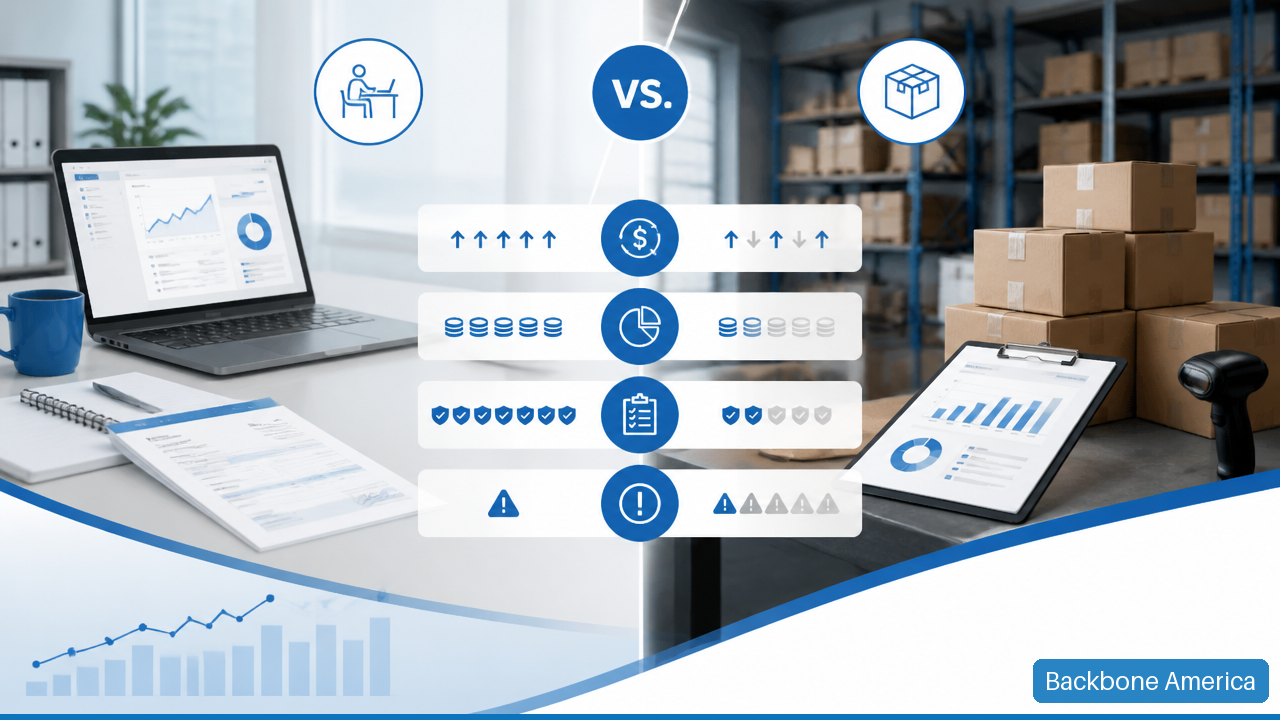
Make the Decision and Break Ties
Once you score the ideas, do not automatically choose the highest total. First, look for weak points hidden by a strong average. A 4.3 score with a 1 in willingness to pay is not ready. It may simply be an appealing concept with unproven demand.
Apply Decision Gates Before Ranking
Use a few nonnegotiable gates. An idea should not move forward until it meets them.
| Decision Gate | Minimum Evidence | If the Idea Fails the Gate |
|---|---|---|
| Payment evidence | At least several target customer conversations plus a specific paid offer test | Run a smaller validation test before spending more |
| Funding capacity | You can cover startup needs and a reasonable cash buffer without unsafe pressure | Reduce scope, seek better terms, or defer the idea |
| Legal path | Required licenses, permits, and claims are understood | Get qualified guidance and revise the operating model |
| Delivery capacity | You can serve an early customer without building a large team or system | Simplify the offer or choose a more manageable entry point |
These gates help distinguish a “not yet” idea from a “no” idea. That is useful because timing can change. Skills can be learned, savings can grow, and access to customers can improve.
Use Explicit Tie Breakers
If two ideas score within a few points, use these factors to help break the tie:
- Fastest path to real customer evidence. Favor the idea that can produce a paid signal sooner, not merely the one that can produce a prototype sooner.
- Lowest cost to disprove. Consider which idea you can test without major irreversible spending.
- Best access to distribution. Give weight to existing relationships, trusted referral partners, professional credibility, or a reachable niche.
- Healthiest cash timing. A lower-revenue idea can be safer when it collects deposits or recurring payments before delivery costs rise.
- Best fit with current responsibilities. Consider which idea you can execute consistently while protecting essential income, benefits, and family commitments.
Founder fit should matter, but not as a permission slip for weak demand. Your expertise may help you understand the customer, earn trust, and avoid costly mistakes. It does not replace a value proposition that customers will pay for.
Don’t Confuse Starting a Business With Proving a Business
When I worked with aspiring business owners as a business advisor, one thing I saw was how easy it could be to focus on the mechanics of starting a business before answering the harder question: does this particular business make sense?
A business plan can help you work through that question, but writing the plan isn’t evidence that customers will buy. Neither is registering an LLC, designing a logo, or building a website.
Those things create business infrastructure. They don’t create demand.
Run a Short Validation Sprint
Avoid endless comparison. Set a limited test period, such as two to four weeks, with a measurable goal for each top idea.
For a service idea, the sprint could include a one-page offer, 15 targeted conversations, and an attempt to sell three paid pilots. For a product idea, it might include supplier quotes, a sample or mockup, a pre-order page, and direct outreach to likely buyers.
At the end, update only the scores affected by evidence. Do not reward activity that did not answer a decision question. A polished logo, a long business plan, or many social media posts may feel productive while revealing little about demand.
If your favorite idea scores worse, do not force it to win. Identify the one or two gaps causing the lower score. If they can be tested cheaply, test them. If they require years, large capital, or unavailable credentials, treat the idea as a later option and move forward with the stronger near-term choice.
You don’t have to choose the business with the biggest potential. You don’t have to choose the easiest one, either. You’re looking for an opportunity where demand, economics, risk, and your own circumstances make sense together.
And “not now” is a legitimate business decision. Keeping your paycheck while you test an idea isn’t a lack of commitment. Sometimes it’s what gives you the time and financial breathing room to figure out whether the business deserves a bigger commitment in the first place.
Frequently Asked Questions
How Do I Compare Two Business Ideas Objectively?
Use the same criteria, scoring definitions, and evidence standard for both. Compare demand, payment evidence, customer access, costs, margins, timing, risk, and founder fit. Keep your assumptions visible so you can challenge them fairly.
Is Market Size or Customer Pain More Important?
Customer pain and willingness to pay usually matter first. A smaller group with an urgent problem and a budget can be more practical than a huge audience with mild interest. Market size becomes more important when you need large-scale growth to make the model work.
Should I Choose the Idea With the Fastest Path to Revenue?
Not always, but speed to credible evidence can be a useful tie breaker. Fast revenue is useful when it comes from the target customer at a sustainable price. Be careful about treating a quick sale based on heavy discounting, favors, or buyers outside your intended market as proof of the larger business model.
What If Two Ideas Are Still Tied?
Run a small validation sprint for both. Give each idea the same time limit and budget. Compare which one earns stronger customer commitments, produces clearer learning, and can be stopped with less loss if the evidence is weak.
Sources
- U.S. Small Business Administration — Write Your Business Plan
- U.S. Small Business Administration — Market Research and Competitive Analysis
- U.S. Federal Trade Commission — Advertising and Marketing Basics
- U.S. Census Bureau — Business Formation Statistics
- U.S. Bureau of Labor Statistics — Business Employment Dynamics
Find Your Next Step in the Business Lab
Whether you are still evaluating business ownership, preparing to launch, or trying to make an existing business easier to manage, the Business Lab provides practical courses, tools, and step-by-step guidance to help you move forward.
EXPLORE THE BUSINESS LAB